Have you ever wondered how doctors can see what’s happening inside your body without having to perform surgery? It’s actually possible thanks to a technology called CT scanning. CT scans use X-rays and computer technology to create detailed images of the inside of the body. They’re used every day in hospitals to help doctors find injuries, detect injuries, detect diseases, and make important decisions about patient care. But how do they work, and what are some of the risks involved?
1. What is Computed Tomography?
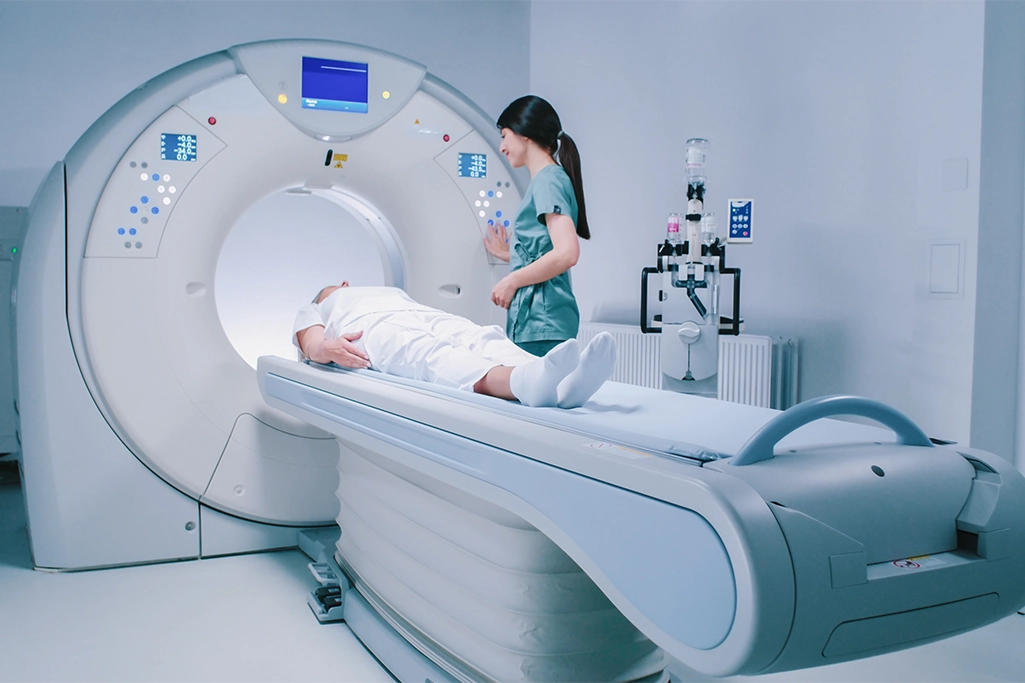
Computed Tomography(CT) is a medical imaging technique that uses X-rays and computer processing to create detailed cross-sectional images of the body. Unlike traditional X-rays, which usually produce flat images, CT imaging allows doctors to examine the body in individual sections. This makes it easier to see organs, bones, blood vessels, and soft tissues.
2. How Does CT Imaging Work?
CT technology combines X-ray equipment with advanced computer systems to produce detailed images. During the procedure, the patient lies on a table that moves through a large circular machine called a gantry.
-
- X-rays: An X-ray tube rotates around the patient’s body, sending X-ray beams through it.
-
- Detectors: Special detectors measure how much radiation passes through the body.
-
- Computer processing: The collected information is sent to a computer for processing.
-
- Image creation: The computer uses the measurements to reconstruct detailed cross-sectional images.
These images allow doctors to examine different parts of the body without surgery.
3. Why is Computed Tomography Used?
CT imaging is used for many medical purposes, especially when doctors need detailed information quickly.
Some common uses include:
-
- Head injuries: Checking for bleeding or injuries inside the brain.
-
- Broken bones: Identifying fractures and examining complicated injuries.
-
- Cancer: Detecting tumors and examining their size and location.
-
- Internal bleeding: Finding bleeding inside the body.
-
- Lung conditions: Examining infections, blood clots, and other lung problems.
CT imaging is especially helpful in emergency departments because it allows doctors to examine injuries and make treatment decisions quickly.
4. What Are the Potential Risks?
Although CT imaging is very useful, there are some risks worth understanding. One of the biggest concerns is radiation exposure. CT uses ionizing radiation, which can damage cells and DNA. Repeated exposure may slightly increase a person’s lifetime risk of developing cancer.
Other possible risks include:
-
- Radiation exposure: CT examinations generally involve more radiation than standard X-rays.
-
- Contrast reactions: Some patients may experience allergic reactions to contrast material used during certain examinations.
-
- Kidney problems: Contrast material may affect patients who already have certain kidney conditions.
Children are also more sensitive to radiation than adults, so healthcare professionals take extra precautions when ordering CT examinations for younger patients.
5. How Can These Risks Be Reduced?
Healthcare professionals follow safety guidelines to protect patients during CT examinations. Some ways they reduce risks include:
-
- Using the lowest radiation dose needed to produce clear images
-
- Avoiding unnecessary examinations
-
- Considering other imaging methods, such as MRI or ultrasound, when appropriate.
-
- Adjusting scanner settings based on the patient’s age and size.
Patients should also inform their healthcare providers about pregnancy, kidney problems, or previous reactions to contrast material.
Conclusion
Computed Tomography has become an important part of modern medicine. It allows doctors to examine the inside of the human body, identify medical problems, and make important decisions about patient care.
Although CT imaging has potential risks, it continues to play an important role in diagnosing injuries and diseases. Understanding how this technology works helps us appreciate how science and technology continue to improve healthcare.
Sources
-
- U.S. Food and Drug Administration (FDA) – Computed Tomography (CT)
https://www.fda.gov/radiation-emitting-products/medical-x-ray-imaging/computed-tomography-ct
- U.S. Food and Drug Administration (FDA) – Computed Tomography (CT)
-
- Centers for Disease Control and Prevention (CDC) – Facts About CT Scans
https://www.cdc.gov/radiation-health/data-research/facts-stats/ct-scans.html
- Centers for Disease Control and Prevention (CDC) – Facts About CT Scans
-
- National Cancer Institute (NCI) – CT Scans and Cancer
https://www.cancer.gov/about-cancer/diagnosis-staging/ct-scans-fact-sheet
- National Cancer Institute (NCI) – CT Scans and Cancer
-
- RadiologyInfo.org – Body CT
https://www.radiologyinfo.org/info/bodyct
- RadiologyInfo.org – Body CT
Leave a Reply