
What is Alzheimer’s Disease?
Alzheimer’s is a progressive neurological disorder that damages brain cells and affects memory, thinking, and behavior. It is the most common cause of dementia, accounting for approximately 60-80% of dementia cases.
It is associated with two abnormal protein accumulations in the brain:
* Amyloid plaques: Build up between brain cells and interfere with communication.
* Tau tangles: Develop inside brain cells and disrupt their normal functioning.
Over time, these changes contribute to brain cell damage and brain shrinkage.
How Does it Affect People?
Alzheimer’s gradually affects a person’s ability to function independently. It differs depending on the stage the patient is in:
– Early Stage patients experience forgetfulness, difficulty remembering recent events and trouble finding words
– Patients in the Middle Stage undergo frequent confusion, personality changes, difficulty recognizing people, and increased independence on caregivers.
– Last stage patients sustain severe memory loss, difficulty communicating, and dependence on others for everyday activities.
– It also affects family members, who often undertake significant caregiving responsibilities.
Populations Frequently Affected
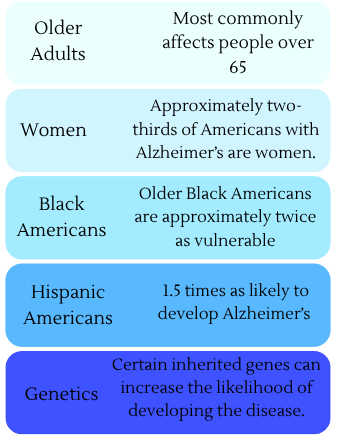
The greatest known risk factor is age.
Treatments
There is currently no cure for Alzheimer’s, but medications can manage symptoms or slow disease progression. Some of these include:
* Donepezil (Aricept): Improves communication between brain cells and can temporarily help memory and thinking.
* Memantine (Namenda): Helps regulate brain activity and manage symptoms in moderate to severe Alzheimer’s.
* Lecanemab (Leqembi): Removes amyloid plaques and slowed cognitive decline by approximately 27% in clinical trials
* Donanemab (Kisunla): Targets amyloid plaques and slowed cognitive decline by approximately 29% in clinical trials.
Future Research
Scientists are currently researching and developing the use of blood tests to identify Alzheimer’s-related proteins, potentially allowing earlier diagnosis and treatment
Leave a Reply