
Overview
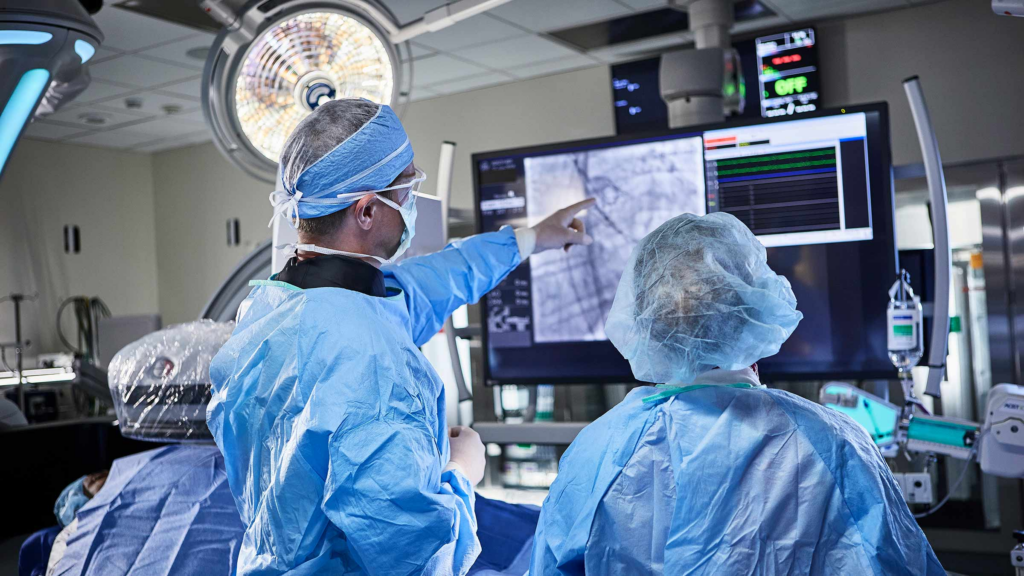
Interventional radiologists are radiologists who specialize in using imaging technology to help guide invasive procedures. “Invasive procedures” sounds intimidating, it typically just applies to procedures that need no cut at all or just a small one.
Interventional radiologists work with issues to do with organs or blood. Some things that they will help treat include cancer, tumors, blockages, back pain, liver problems, and kidney problems. Interventional radiologists can help treat these things by using imaging technology to help guide procedures, as mentioned before. Some examples of procedures are the insertion of catheters, line and tube placement, and more.
Being minimally invasive, interventional radiologists’ patients usually have lower pain tolerance or are high risk in more invasive procedures. In addition to being less painful and lower risk, procedures in interventional radiology also have a shorter recovery time than surgery.
Pathway to Become
Since interventional radiology is a type of radiology, the requirements to become an interventional radiologist are very, very similar to the ones needed to be a radiologist. However, one difference is that becoming an interventional radiologists takes a little longer to reach their goal. Becoming an interventional radiologist can take up to a long 15 years! Because of that, you must be extremely dedicated to enter this field. Once you finish the extensive schooling and training required to be an interventional radiologist, you must adjust to what the job itself requires. Since interventional radiologists are responsible for treating a multitude of different conditions, the profession requires a lot of responsibility. This means that it does run the risk of cutting into your personal time! Because of this, maintaining a work-life balance may be difficult.
Since interventional radiologists work with invasive procedures, those who are interested in surgery may also be interested in this. However, if you do choose to be an interventional radiologist, you will also be doing a lot of work with imaging, so if that’s not something you’re interested in, you might want to look into other careers.
Some people worry about the job security, especially because of AI. Despite the advances in recent technologies, interventional radiology is still predicted to be in high demand in the future. Plus, the nature of interventional radiology requires delicate procedures that most people would prefer to be done by another human, rather than a robot.
Personal Take
I think that interventional radiology seems very interesting, and something that would be a good fit if you want to be more hands-on with treatment and patients without necessarily having to be involved in complex surgeries. However, I do think that if this is something that you are interested in doing, you do have to plan for the long schooling and you may struggle with establishing a healthy work-life balance when you first start out.
Resources I used and Where You Can Learn More
https://my.clevelandclinic.org/health/articles/24184-radiologist
https://www.hopkinsmedicine.org/health/treatment-tests-and-therapies/the-radiologist
https://www.indeed.com/career-advice/finding-a-job/day-in-the-life-of-a-radiologist
https://medlineplus.gov/ency/article/007451.htm
https://medschoolinsiders.com/pre-med/so-you-want-to-be-an-interventional-radiologist