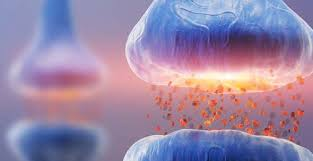
What is Myasthenia Gravis?
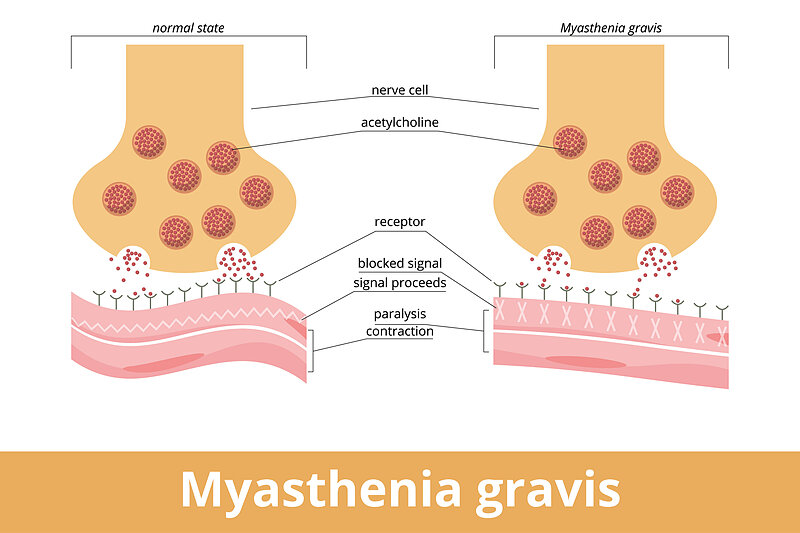
The weakening of voluntary muscles and the prevention of nerve-muscle communication for contraction because of antibodies produced that prevent communication through receptor sites.
Causes– An abnormally large thymus, either from swelling or tumors, can cause the production of antibodies that destroy or block the anti-acetylcholine receptor. This prevents muscle contraction and strengthening, causing muscle fatigue that worsens with exercise.
Symptoms– Fluctuating weakness in voluntary muscles, drooping eyelids, and double vision (weak ocular muscles), difficulty swallowing and chewing, changes in facial expression, difficulties walking/lifting, and breathing issues from weak diaphragm muscles.
Treatments– Medications like a Cholinesterase inhibitor (prevents the destruction of the receptor protein) or Immunosuppressants (prevents the production of antibodies that cause harm to receptors) may lessen the root cause of the muscle weakness. Thymus removal surgery may prevent the production of antibodies, but causes additional issues such as other autoimmune diseases or an increased risk of cancer.
A Physical Therapist’s Solutions
Treatment plans are difficult to execute because overexertion causes fatigue that requires rest, which delays previously made progress. As rest improves symptoms of MG, physical therapy as a treatment is usually reserved for when a patient with MG becomes stable. While physical therapy is not a treatment designed for recovery, it raises the baseline for functionality in everyday tasks.
During Physical Therapy, mild-to-moderate low-impact exercise, such as swimming, walking, restorative yoga, stretching, and stationary cycling indoors (as heat may also trigger a flare-up). Cooling suits or packs are sometimes used to moderate the symptoms during exercise as well. An important muscle group to train is the core, as these support posture, breathing, and many other movements. Physical therapy helps strengthen these, as many bodyweight exercises are low-impact and low-exertion.