Overview
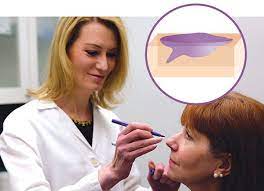
Named after Frederick E. Mohs, this procedure is one method of treating skin cancer lesions. Surgeons remove small layers of skin at a time, closely examining each layer through a microscope to ensure no cancer remains. In short, Mohs surgery is used to treat many common skin cancers.
Goal of Procedure
The main objective of the surgery itself is to protect healthy skin while removing the cancerous areas. Additionally, the procedure now has a success rate reaching 99%! Mohs surgery is one of the most successful techniques for skin cancer, usually found on the head, neck, and areas with increased growth.
Patient Risk
Patients who receive Mohs surgery have skin cancers like melanoma, squamous cell carcinoma (SCC), and other skin cancers. These patients who seek this procedure often have an increased risk of cancer returning, large & fast growth, and areas on the body where patients want to have as much healthy tissue as possible. However, these patients can also see risks during the surgery. These risks include bleeding, infection, and pain after the operation. Alongside these problems, treatment can leave a scar and temporary or permanent weakness in the surgical area. Overall, Mohs surgery is extremely beneficial for those needing treatment of SCCs and basal cell carcinoma (BCCs).
Pre-Operation
These procedures are often preformed in outpatient clinics using a general anesthetic. Before making an incision, surgeons begin the procedure by mapping, which allows them to plan out the removal of each layer. Patients receiving treatment can expect to wear their normal clothes unless the area receiving treatment requires a hospital gown. Patients might also expect to lie down or sit up during the procedure (it will depend on what is best for the surgeon).
During the Procedure
Mobs surgery can take anywhere from 3 to 4 hours, depending on the size of the affected area and the type of skin cancer. During this time, a Mohs Surgeon will remove the Margin (a thin layer of tissue) where the cancer is using a scalpel. Additional layers are removed depending on if the surgeon finds other areas with signs of cancerous cells. While this part of the procedure only takes a few minutes, the longest part happens in a lab nearby. The tissue that was removed is brought to the lab for analysis. Surgeons will examine the tissue using a microscope.
Post-Operation
Following the surgery, patients often experience swelling and bruising. Like any swollen area, it takes about 5 to 7 days for the body to return to normal. However, it also depends on the patient and where on the body the procedure took place. It may also vary based on what your surgeon chooses to do to fix the wound. Some may choose to cover the area by pulling the skin over the wound, allowing it to heal on its own, or even using It takes about 2 weeks, typically, for the stitches to dissolve. This provides ample time for the body to self-heal and regenerate. In addition, the overall healing process takes up to about 8 weeks. While your body is healing, it is typically best to avoid direct sun exposure and to ensure the wound is clean. Many might experience scarring, but it is not permanent and a patient can now live cancer-free!
Sources
https://www.mayoclinic.org/tests-procedures/mohs-surgery/about/pac-20385222